

Across South America, the 2025/26 season has been defined by shifting weather conditions that evolved differently across regions and crop stages through the season. These developments are now translating into varied yield outcomes across South America’s major crops. Octopusbot’s AI models quantify these developments by analysing hundreds of weather parameters across the crop cycle at a regional level, enabling a detailed assessment of how changing conditions translate into yield outcomes across major producing areas.
In Argentina, corn production estimates remain higher than USDA, supported by improving seasonal rainfall conditions during the later stages of crop development across key regions.
In Brazil, soybean production estimates are being impacted by harvest-stage developments across different parts of the country, where excessive rainfall in northern and central states has slowed harvest progress, while southern regions are still approaching harvest.
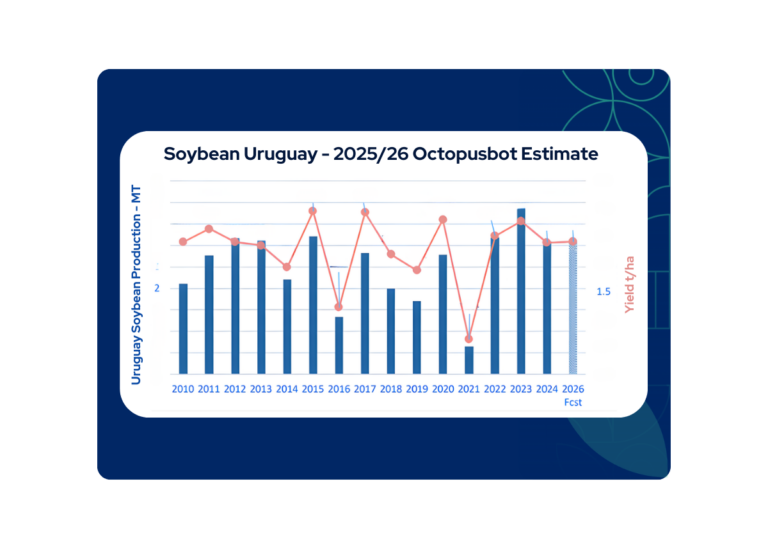
Meanwhile, soybean crops in Uruguay have faced drier conditions during key development stages, which are beginning to affect crop conditions.
This blog examines the latest developments in Argentina corn, Brazil soybean, and Uruguay soybean, focusing on how weather patterns, harvest progress, and regional crop conditions are shaping production estimates across South America in the 2025/26 season, with NDVI indicators providing supporting evidence for Octopusbot’s outlook.
Latest Argentina Corn Production Estimate
Octopusbot’s latest estimate for Argentina corn production in the 2025/26 season was revised slightly lower compared with the previous update, reflecting lower-than-forecast rainfall during February resulting soil moisture deficits across key producing regions. Despite this revision, production estimates remain higher than USDA, supported by a positive seasonal rainfall outlook.
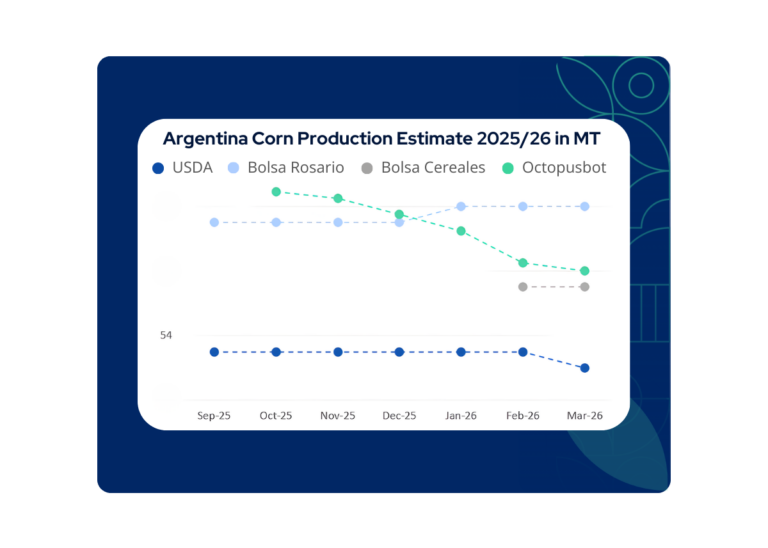
The key drivers impacting the latest production estimate for Argentina corn are:
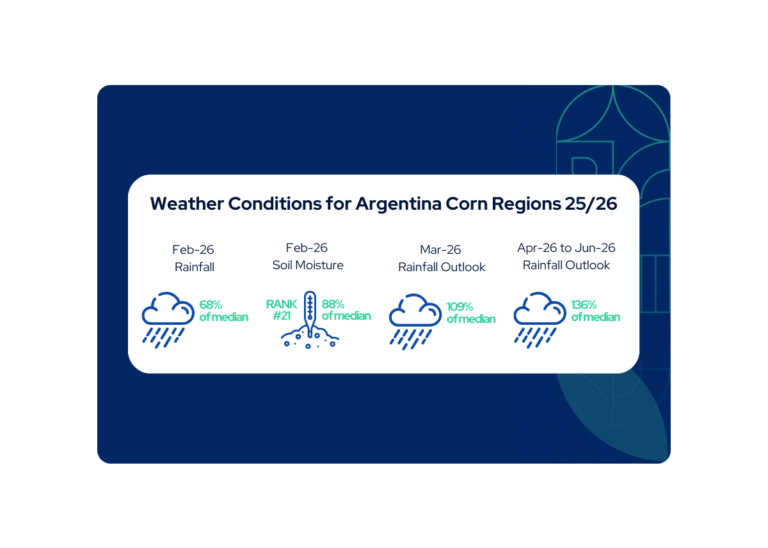
- Precipitation: February 2026 recorded lower-than-forecast rainfall, reaching 68% of the median compared with 102% forecast.
- Soil Moisture: Soil moisture remained below median in February (88%), ranking #21 driest of the last 26 years nationally. Buenos Aires recorded extreme soil moisture deficits, ranking #24 driest of the last 26 years.
- Planted Area: Corn planted area increased 11% year-on-year, supporting higher production compared with last season.
- Precipitation Outlook: Rainfall is forecast above median in March (~109%) and significantly above median from April through June (~136%).
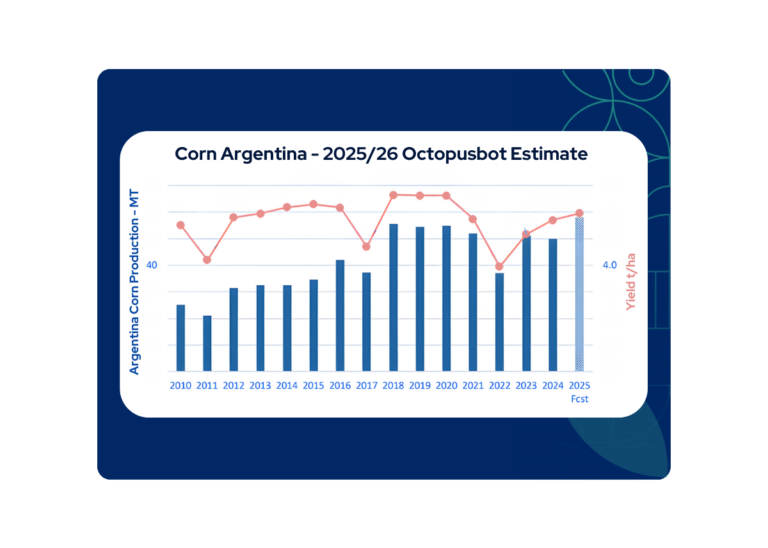
Despite a dry February, Argentina’s corn yields are projected higher than last year and the highest since 2020, mainly driven by the positive rainfall outlook from March through July (~125% of the median).
Weather Outlook Driving Forecast Differences Across Agencies
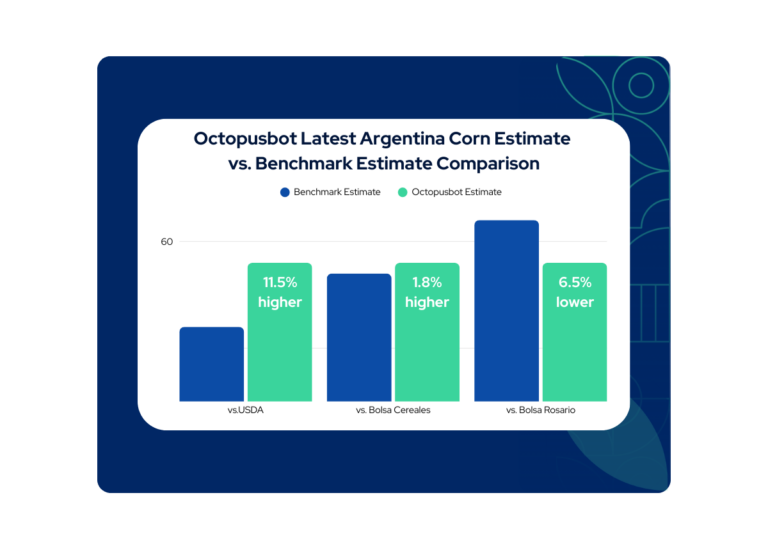
Octopusbot’s latest estimate for Argentina corn production in the 2025/26 season is 11.5% higher than USDA, pointing to a stronger production level than currently reflected in USDA’s outlook.
Historically, local Argentine agencies such as Bolsa de Cereales and Bolsa de Comercio de Rosario have tended to land closer to final production figures. The latest estimates from these agencies are also higher than USDA and broadly aligned with Octopusbot’s projections. Octopusbot’s estimate is 1.8% higher than Bolsa de Cereales and 6.5% lower than Bolsa de Comercio de Rosario, while the gap between these local estimates and USDA’s projection remains significantly wider.
The higher estimate is mainly supported by the positive seasonal rainfall outlook across Argentina’s corn-producing regions. Precipitation from March through July 2026 is forecast at around 125% of the median, providing adequate moisture following dry conditions in February.
With favourable rainfall expected through the remainder of the season, yield prospects across key producing provinces remain supported, reinforcing production estimates that remain above USDA projections.
Latest Brazil Soybean Production Estimate
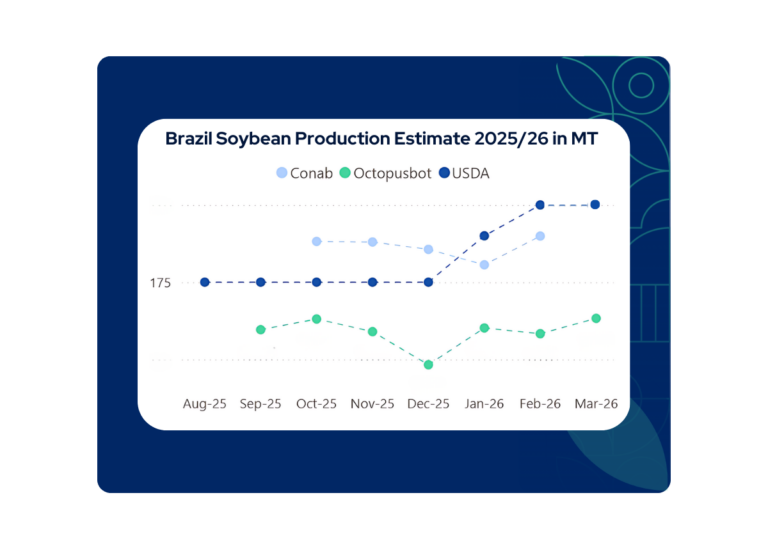
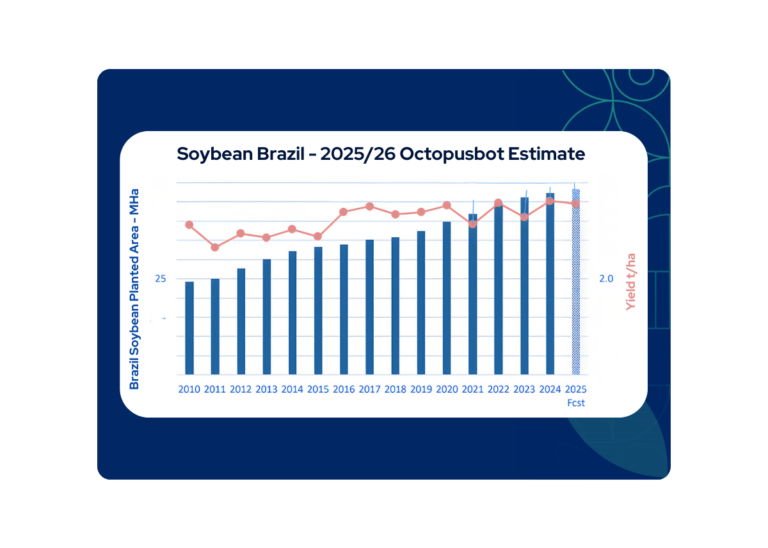
Octopusbot’s latest estimate for Brazil soybean production in the 2025–26 season has been revised higher compared to the previous update, following lower-than-forecast rainfall during the harvest period across northern and central regions. Due to the overall wet conditions in some key areas early in the harvest window, the estimate remains lower than USDA’s outlook.
The key drivers impacting the latest production estimate for Brazil soybean are:
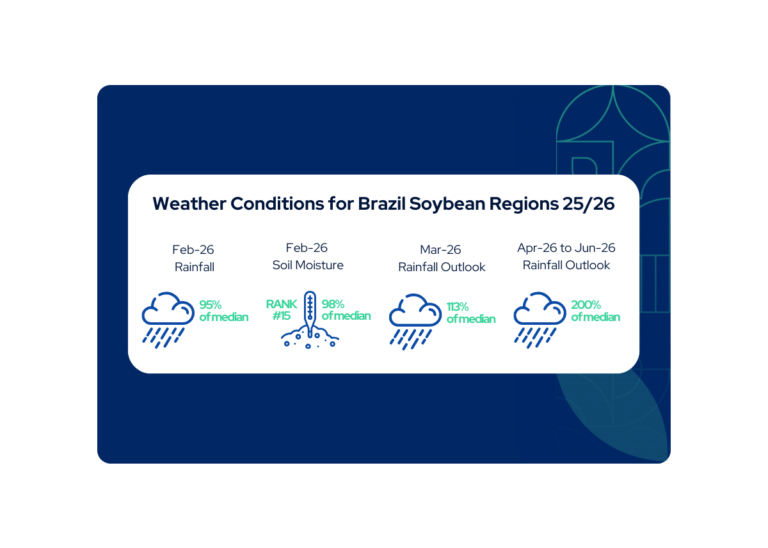
- Precipitation: February 2026 rainfall was lower than forecast nationally, recording 95% of the median compared with a 107% forecast. However, significantly high rainfall was recorded in Minas Gerais receiving 156% of the median compared with a 140% forecast.
- Soil Moisture: National soil moisture levels remained close to the median (98%), while Goiás and Minas Gerais recorded above-median levels at 101% and 107%, respectively.
- Planted Area: Soybean planted area increased 9% year-on-year.
- Precipitation Outlook: Rainfall is forecast above median in March (~113%), with significantly above-median precipitation expected from April through June (~200%) across soybean regions.
Harvest Rainfall and Satellite Data Support Lower Brazil Soybean Estimates
Octopusbot’s latest estimate for Brazil soybean sits 4% below USDA’s estimate. In Brazil, soybean production outcomes are increasingly being shaped by weather conditions across regions at different harvest stages, which Octopusbot’s models capture through regional crop monitoring.
Harvest has already begun in northern regions, where wetter conditions than previous years during the harvest window have begun to weigh on yields. As a result, harvest progress is about 10% behind last year.
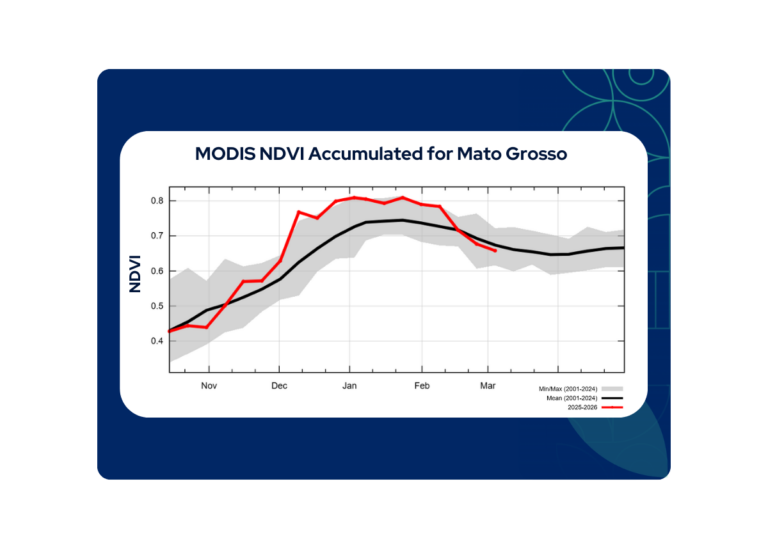
Some of the largest differences between Octopusbot’s estimates and official estimates are in Mato Grosso, where harvesting is already underway. The region received 251 mm of rainfall during the harvest period, well above the national average of 193 mm, resulting in wetter conditions than previous years which lowered yield potential. At this stage of the season, NDVI is tracking below the historical mean (MODIS 2001-2024) in Mato Grosso, further supporting Octopusbot’s lower production estimates.
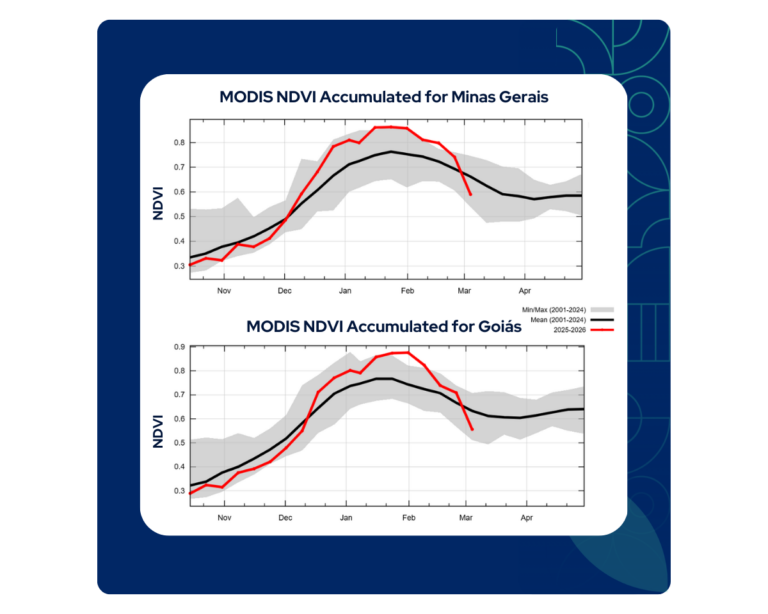
Similar conditions have also affected Minas Gerais and Goiás, where harvest has progressed under wetter conditions during February. Minas Gerais received 156% of the median rainfall, leading to above-median soil moisture levels of 107%. In Goiás, soil moisture remained above median at 101%. NDVI indicators are also showing declining seasonal biomass, tracking below the historical mean at this stage of the season in both regions, supporting lower yield potential.
Further south, Rio Grande do Sul has not yet reached the main harvest window. Earlier in the season, markets expected a very strong crop from the region, similar to the 2023–24 season. However, recent NDVI readings appear weaker than earlier levels. While the crop still looks good overall, these signals suggest yields may not reach the exceptional levels anticipated by official agencies.
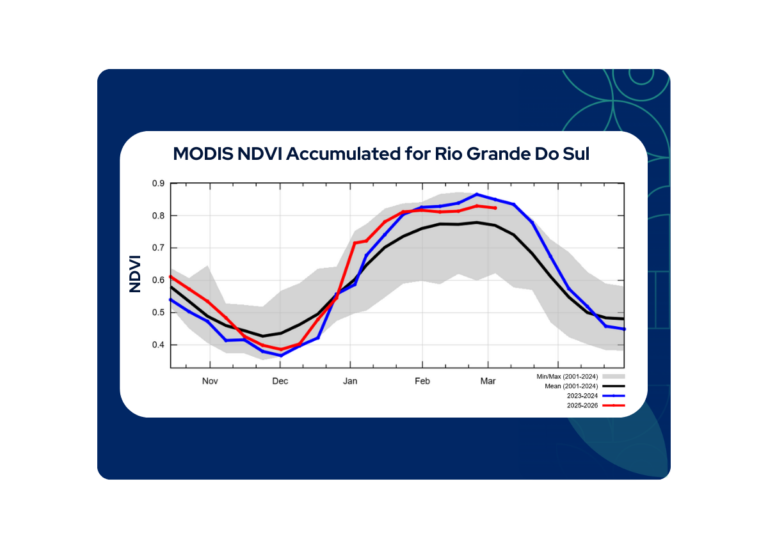
Across the southern regions, harvest is yet to begin, meaning the seasonal rainfall outlook will remain an important factor for final yields. Overall, Brazil’s soybean crop is still expected to be very strong, but the NDVI patterns observed across multiple regions support Octopusbot’s lower production estimate relative to USDA and CONAB.
Based on weather conditions observed across the crop cycle and harvest window, supported by seasonal biomass indicators, yields are likely to remain slightly below last season’s record levels. While favourable early-season soil moisture supported the crop, wetter conditions during the harvest period in some regions have marginally weighed on yield potential.
Lower Uruguay Soybean Estimates Following Dry Conditions
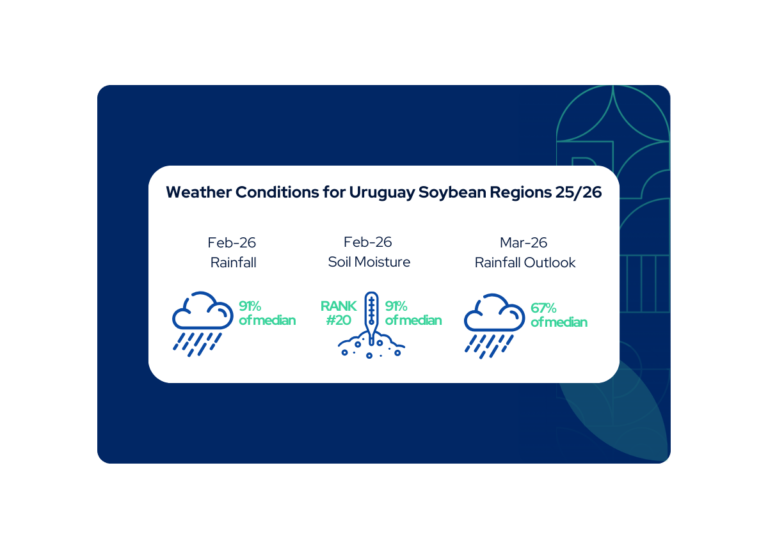
Octopusbot’s latest Uruguay soybean production estimate for the 2025/26 season has been revised downward compared to the previous update, mainly due to below-median rainfall in February 2026 (~91% of the median) and below-median soil moisture (~91%), ranking #20 driest of the last 24 years for this time of the season. The March rainfall outlook remains significantly dry (~67% of the median), adding further stress to the crop during key growth stages.
Seasonal biomass indicators also reflect these developments. MODIS NDVI readings are currently tracking below the historical mean (2001–2024) during the peak growth period, indicating weaker vegetation conditions across soybean areas.
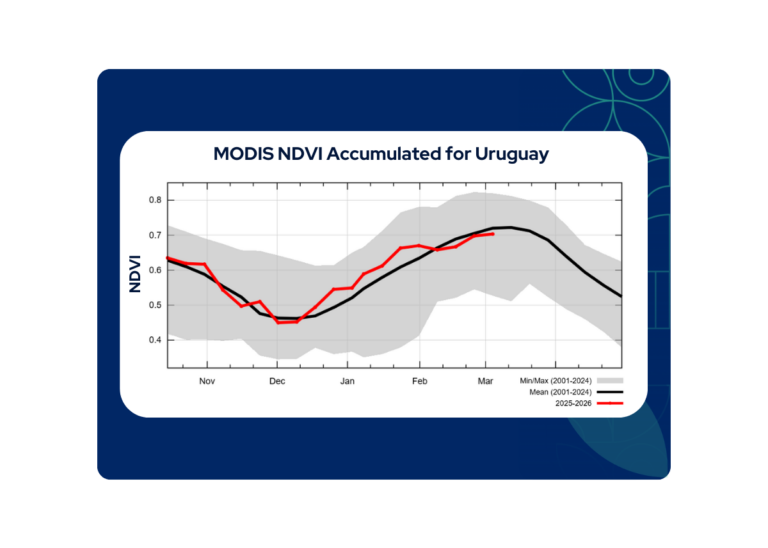
Despite the dry conditions observed during February, rainfall from April through May is forecast above median at around 127%, which may prevent a sharper decline in yields. As a result, soybean yields in Uruguay are projected to be similar to last season.
Octopusbot Past Forecast Accuracy
Understanding how weather conditions translate into yield outcomes is critical when assessing crop production across South America. Variability in rainfall, soil moisture, and crop development across regions can significantly influence final yields, making early identification of these trends essential for accurate production estimates.
Octopusbot’s technology combines historical and real-time weather patterns with historical yields at a regional level to produce accurate forecasts for the season. By analysing how crops respond to evolving weather conditions across different regions and growth stages, Octopusbot can identify yield-driven production trends accurately for the season.
This enables growers, traders, and agribusinesses to plan ahead with confidence, trade at the right price, make confident data-driven decisions, and ultimately gain an edge to improve income.
Octopusbot has consistently demonstrated strong forecast accuracy across South American crops, identifying production trends months ahead of traditional agencies.
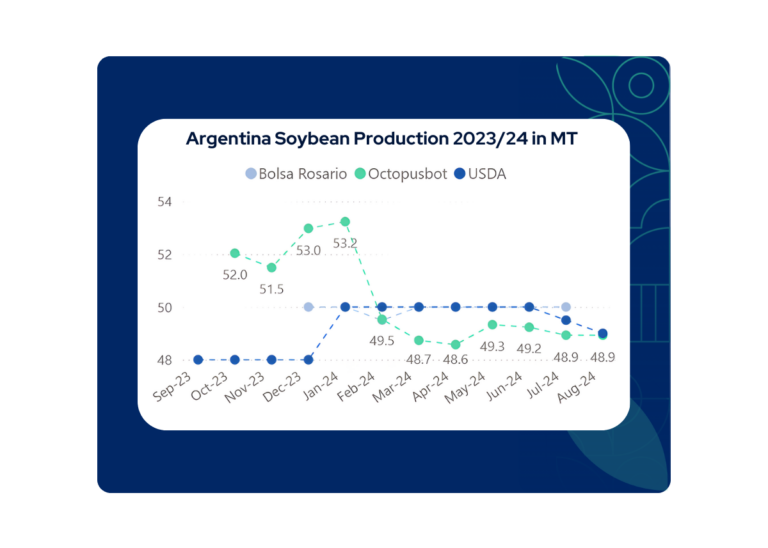
In November 2023, Octopusbot predicted the season’s production trend for Argentina soybean within 95% accuracy range, 9 months before the final estimate, with a difference of 0.2% on the final estimate.
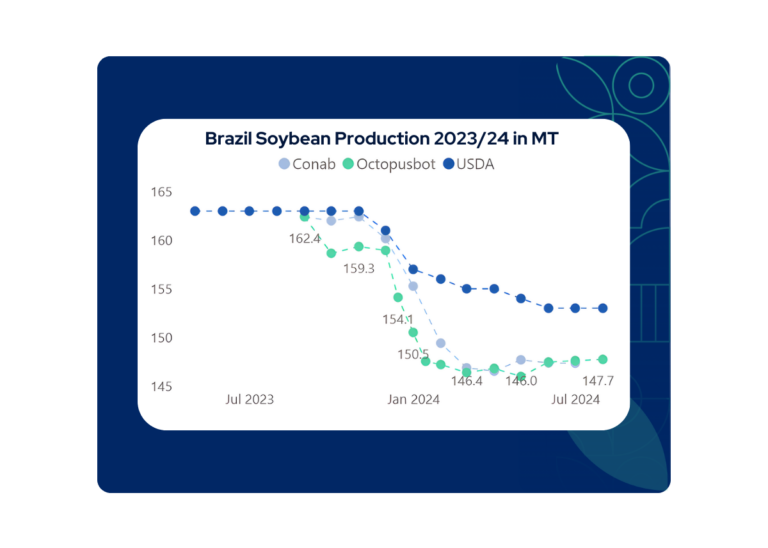
In December 2023, Octopusbot predicted the season’s production trend for Brazil soybean within 95% accuracy range, 8 months before the final estimate and 2 months before Conab, with a difference of 0.3% on the final estimate.
 For full, detailed AI forecasts on South America wheat, corn, barley and soybean & more:
Comments are closed