
Argentina is heading into one of its strongest winter crop seasons on record, with Octopusbot’s models pointing to the second-best wheat crop on record and record barley production for the 2026/27 season.
Argentina Wheat Outlook Strengthens in August
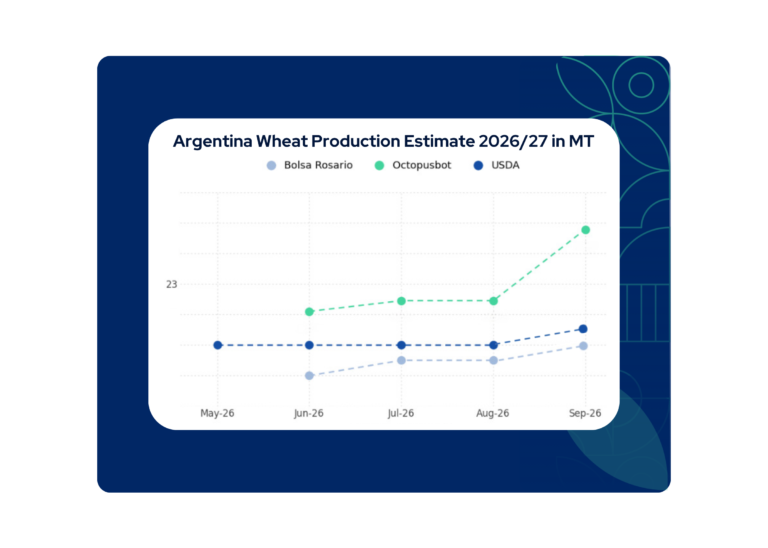
Octopusbot’s latest Argentina wheat production estimate increased by around 8% compared to the previous estimate, following improved rainfall and soil moisture conditions across key wheat regions in August. The estimate remains around 15% above USDA and 18% above Bolsa Rosario’s estimates.
The latest upward revision was supported by above-median August rainfall, near-record soil moisture conditions and a favourable rainfall outlook through the key spring grain-fill period. The key drivers include:
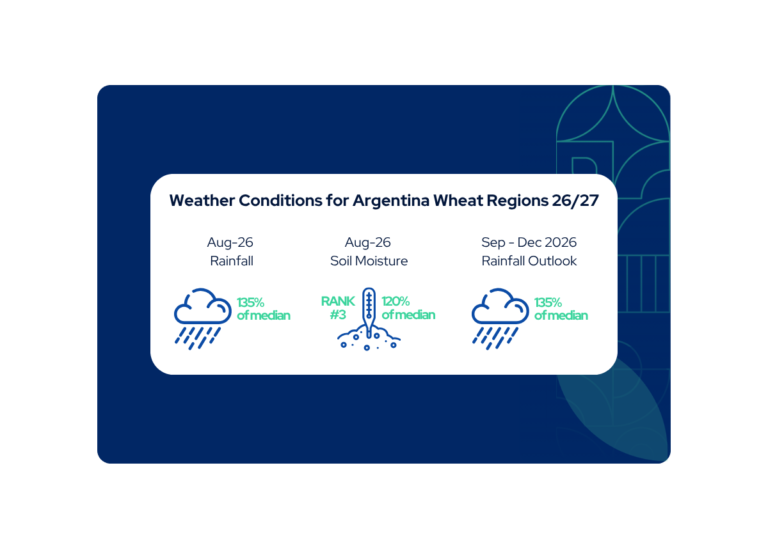
- Precipitation: Rainfall was above median in August (135% of the median).
- Soil Moisture: Soil moisture improved to 120% of the median nationally, increasing from rank #11 in July to rank #3 of the last 24 years.
- Precipitation Outlook: Above-median rainfall is forecast for September (109% of the median), October (122% of the median) and November-December (155% of the median).
Where are Wheat Yields Improving the Most?
The improvement has been particularly strong in Buenos Aires and Santa Fe, which together account for 57% of Argentina’s wheat planted area and recorded some of the largest yield improvements in the latest estimate.
Soil moisture in Buenos Aires improved from 108% of the median in July to 119% in August, ranking #3 of the last 24 years, while Santa Fe improved from 94% to 121%, ranking #1 of the last 24 years, supporting upward yield revisions in Octopusbot’s latest September estimate.
The gains across these two major producing regions have been a key contributor to the stronger national wheat outlook.
Argentina Wheat Tracking Second-Highest Crop on Record
The stronger August conditions build on a favourable start to the season. Soil moisture was above median during sowing in May and June, at 107% of the median, supporting crop establishment.
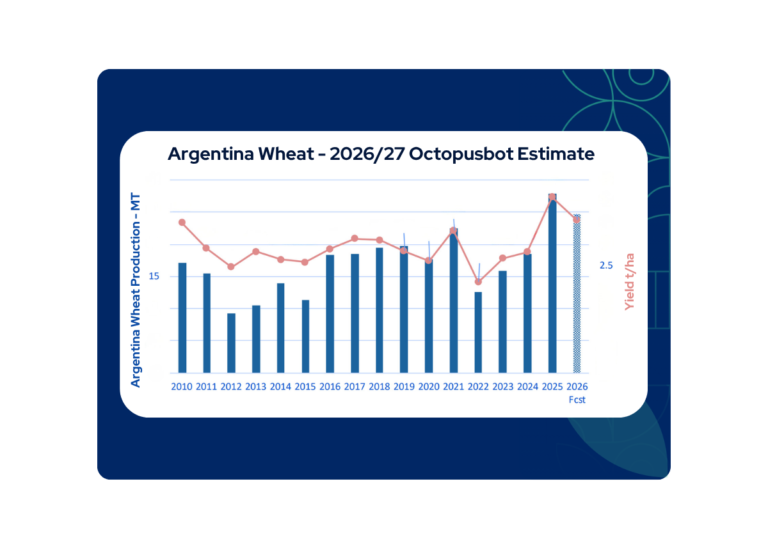
Moisture conditions have remained favourable through the season, while the rainfall outlook remains positive, particularly during the key grain-fill period in September and October. These favourable seasonal conditions are supporting wheat yields above the five-year average, ranking as the second highest on record and only below last year’s record.
Planted area is also estimated up around 2% year-on-year. Production is projected around 11% below last year’s record crop but still ranks as the second highest on record.
Barley also Tracking a Record Crop
The favourable winter growing season is also supporting Argentina’s barley crop. Barley started with strong sowing conditions, with soil moisture at 108% of the median from May to June. Soil moisture has remained above median throughout the season, with August recording 114% of the median. The outlook remains favourable into spring, with September-November rainfall forecast at 107% of the median.
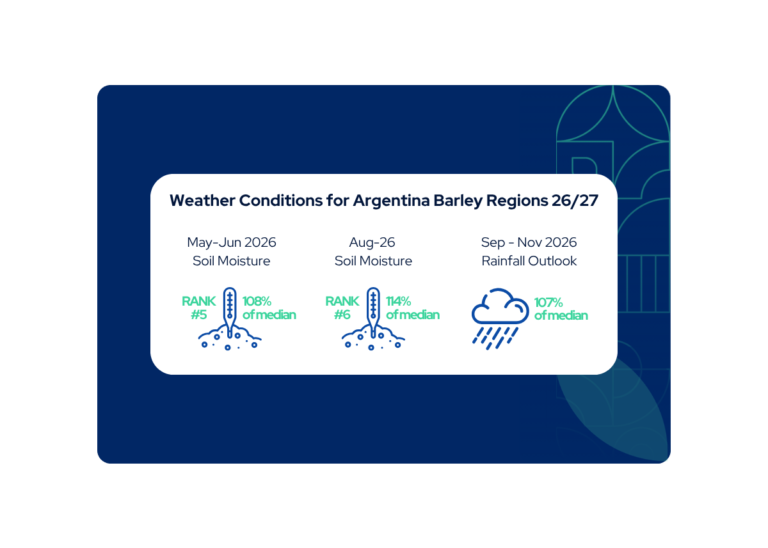
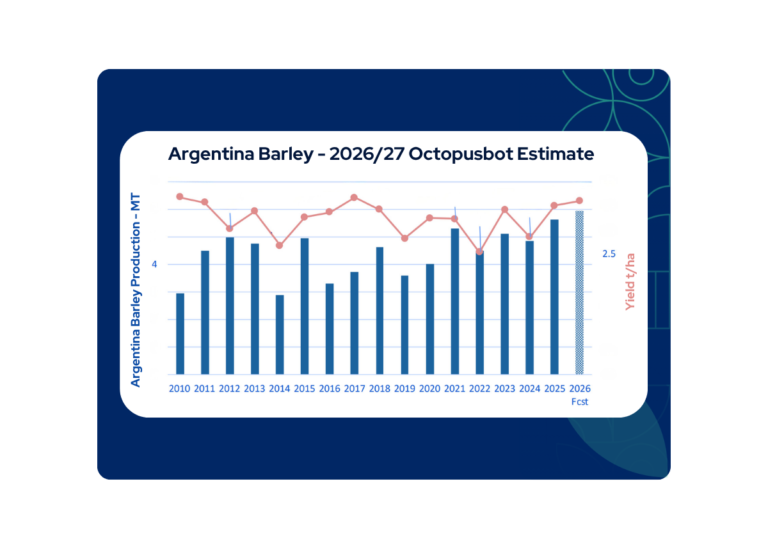
These conditions are supporting barley yields above last year and the five-year average, ranking as the third highest on record. With planted area up around 2.5% year-on-year, a record crop is projected, around 13% above USDA’s latest estimate.
The large winter crop could also become increasingly important for the market toward the end of the year. If the Black Sea disruption continues to restrict export flows, Argentina’s grain could help cover part of the market, potentially adding bearish pressure on prices as harvest supply becomes available.
Satellite Data Shows Strongest Winter Crop Signal in 12 Years
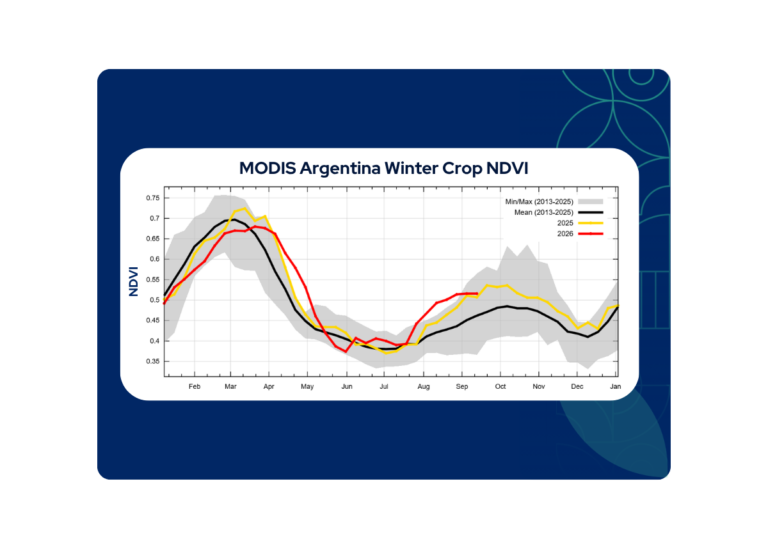
The strength of the season is also becoming increasingly visible in satellite data, supporting Octopusbot’s outlook. NDVI across the winter grain belt, where wheat represents most of the planted area, has remained strong since the start of the season.
The current season (red line) has tracked above last year (yellow line) and well above the historical mean (black line) since early August, moving closer to last year’s levels into September. This marks the strongest seasonal biomass signal of the past 12 years.
Octopusbot Past Forecast Accuracy
Octopusbot’s models have consistently demonstrated strong forecast accuracy across Argentina and the broader South American grain and oilseed markets, combining hundreds of weather parameters with historical yields at the provincial level to quantify production shifts early and accurately, well ahead of official estimates.
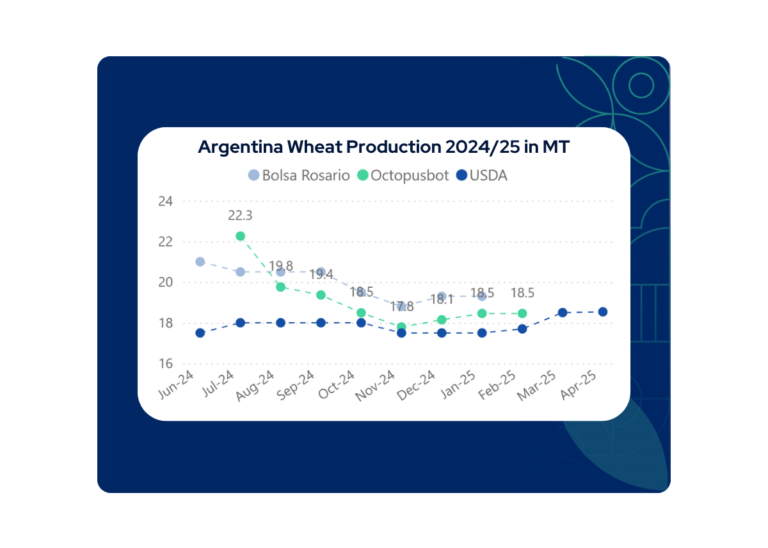
In August 2024, Octopusbot predicted the season’s production for Argentina wheat within the 95% accuracy range, 4 months before the final estimate and 2 months before Bolsa Rosario, with a difference of 4.1% from the final estimate.
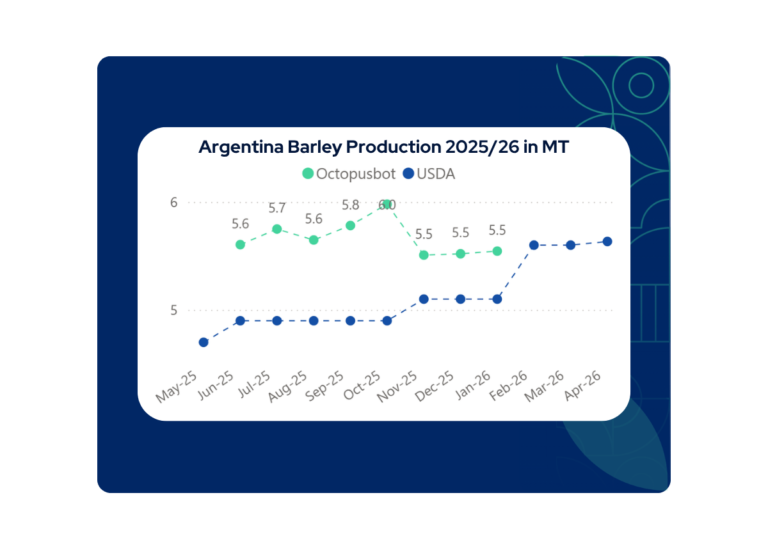
In June 2025, Octopusbot predicted the season’s production trend for Argentina barley within 95% accuracy range, 8 months before the final estimate and 8 months before USDA, with a difference of 1.8% on the final estimate.
Octopusbot empowers growers, grain traders, brokers, and agribusinesses globally with trusted forecasts that quantify production risks and shifts early in the season. By removing market noise and bias, Octopusbot’s trusted forecasts help market participants plan ahead with confidence, trade at the right price, make data-driven decisions, and gain an edge to improve income.
 For full, detailed AI forecasts on Argentina wheat, barley, corn, soybean & more:
Comments are closed