
Canada Canola Dropped: Reduced Planted Areas, Persistent Dryness & Low Rainfall
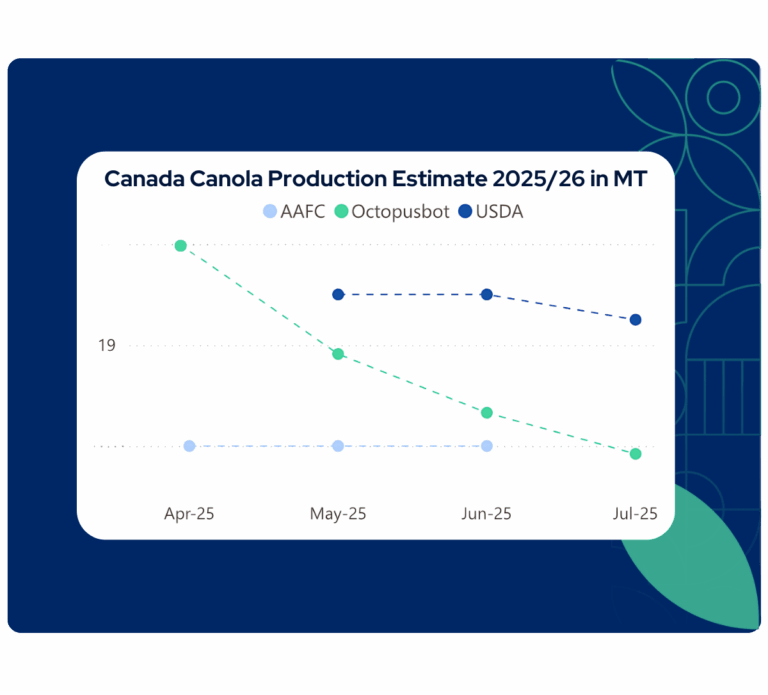
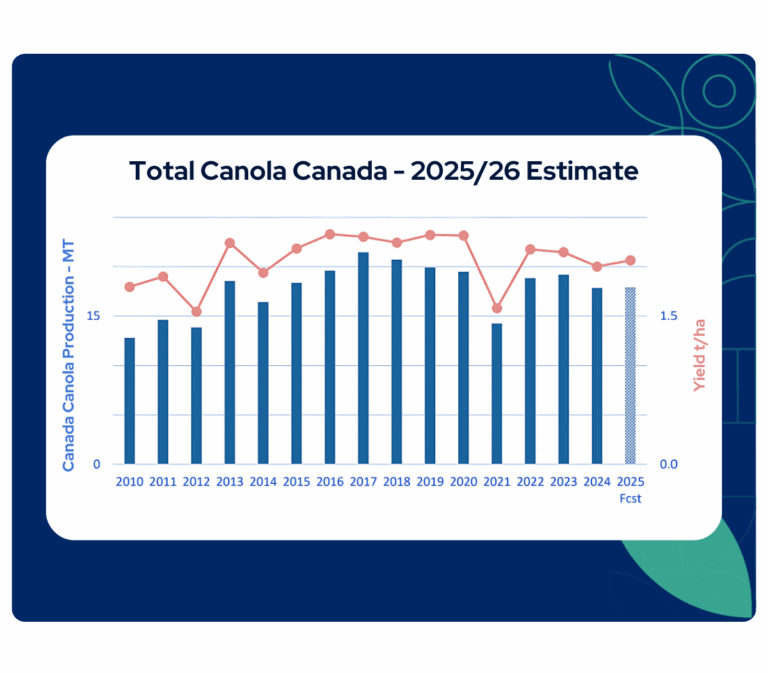
Canada’s canola production estimate for the 2025/26 season has been revised downward compared to the previous estimate by Octopusbot, driven by lower planted areas and a persistent soil moisture deficit in June. Dry conditions and below-median rainfall were recorded across all major producing provinces in June, with declines observed in Saskatchewan, partially offset by gains in Manitoba and Alberta. The broader seasonal forecast points to continued below-median precipitation through August and September, weighing on production potential.
Key Drivers Impacting Canola Production
The decline in Canada’s canola production estimates is driven by these significant factors:
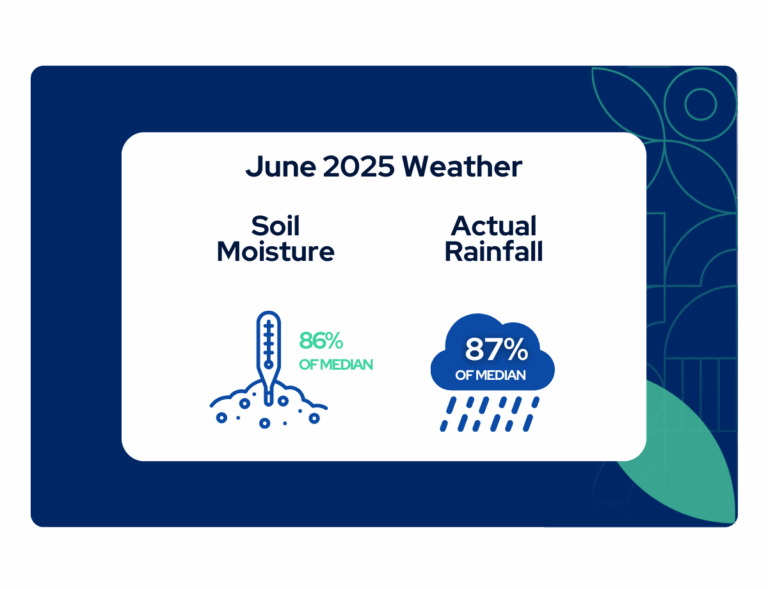
- Soil Moisture: A significant moisture deficit persisted in June 2025, with soil moisture ranking 20th driest out of the past 24 years.
- Precipitation: June 2025 rainfall was below median across all provinces, averaging 87% of the median.
- Temperature: Near-median temperatures were recorded in June 2025.
- Planted Areas: Canola planted area declined compared to the previous estimate, based on the latest Statistics Canada data. Relative to 2024, planted area is down by 2.5%.
Seasonal Outlook: Continued Below-Median Rainfall Forecast
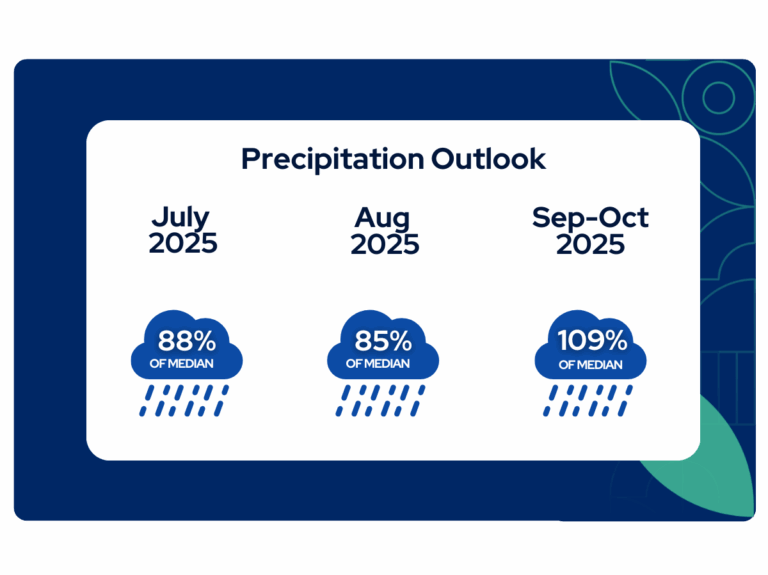
Precipitation is forecast to remain below the median in July and August 2025, averaging 87% of the median across key crop growing regions. September and October is expected to bring above-median rainfall, with forecasts at 109% of the median.
Impact on Canola Yields
Canola yields for the 2025/26 season are projected to increase compared to the 2024/25 season and remain slightly above the five-year average. Octopusbot’s latest forecast remains lower compared to the Agriculture and Agri-Food Canada (AAFC) figures.
Octopusbot’s Forecast Accuracy
Octopusbot’s early and accurate AI forecasts help agribusinesses tackle price volatility and weather risk with confidence. In today’s volatile grain and oilseed markets, Octopusbot provides the tools to make smarter data-driven decisions to mitigate risk and maximize profits.
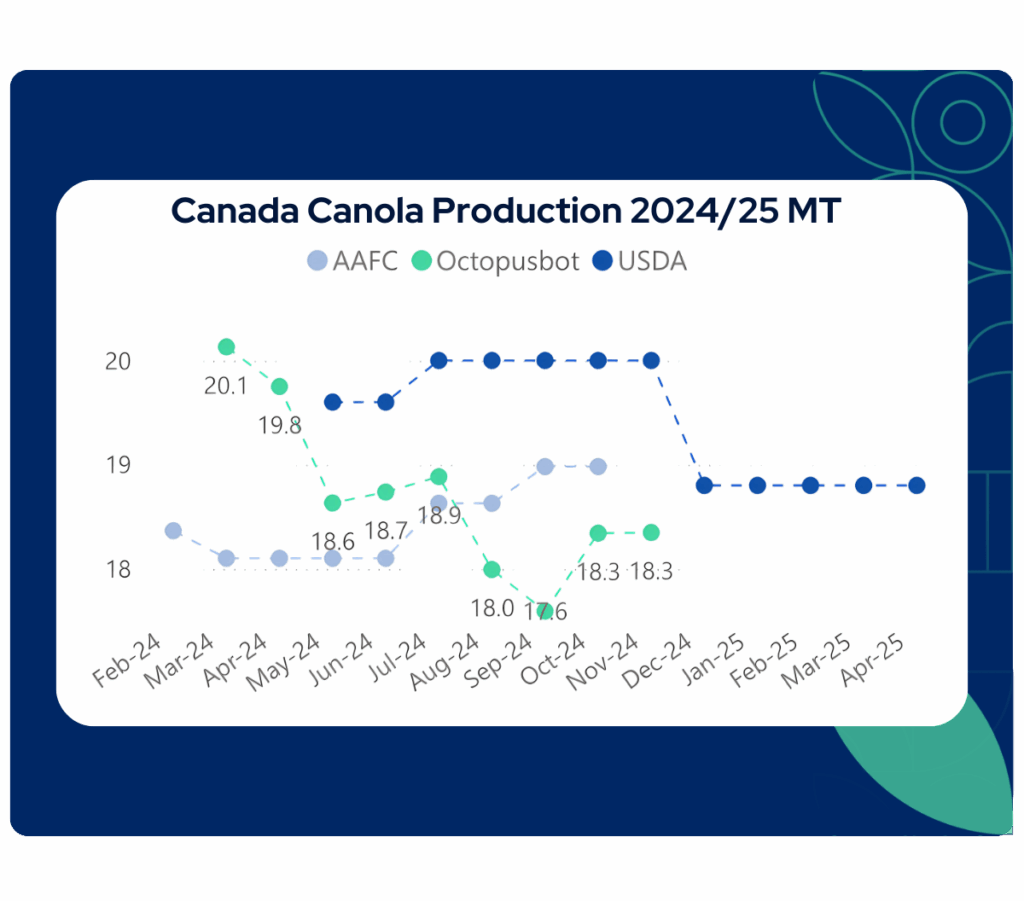
In April 2024, Octopusbot predicted within 95% accuracy range, that the season’s production would trend lower than the USDA, 7 months before the final estimate and 1 month before USDA, with a difference of 2.7% on the final estimate.
Comments are closed